Lymphatic Drainage vs. Body Sculpting: What Clients Should Know
By Valerie DuPree, LMT, CLT, CMLDT — Full Circle Vitality, Columbus, Ohio

You see a new wellness studio advertising lymphatic flow, body contouring, or de-bloating. Perhaps its treatment menu sounds similar to the manual lymphatic drainage you already receive.
It is reasonable to wonder whether these are different names for the same thing.
Similar language can describe services with different goals, techniques, and practitioner qualifications. Understanding those differences helps you choose an appointment that fits your needs.
As a licensed massage therapist with additional training in manual lymphatic drainage and lymphedema care, I welcome informed interest in this work. I also want clients to understand what they are booking, especially when swelling, surgery, or an existing health condition is involved.
Similar wording can describe different services
A reference to the lymphatic system tells you the subject being discussed. It does not, by itself, establish the provider's qualifications or identify the technique.
Terms such as sculpting, drainage, contouring, and lymphatic support need explanation. Ask what the provider actually does and what outcome the service is intended to produce.
This applies whether you are considering an independent practice, a medical setting, a spa, or a branded studio or franchise. A business's ownership and appearance do not establish the competence of the person providing your care. The same questions should apply to every setting, including my own.
What manual lymphatic drainage involves
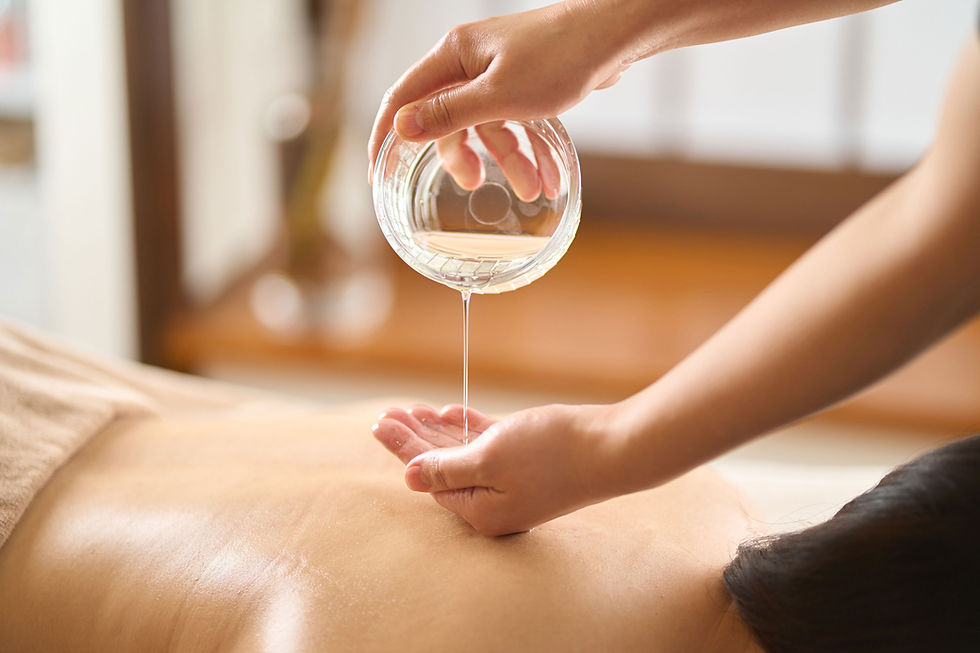
Manual lymphatic drainage, usually abbreviated MLD, uses gentle, strategically directed manual techniques to help move lymph fluid. The National Cancer Institute describes it as part of complete decongestive therapy, or CDT, which can also include compression, exercise, and skin care for lymphedema.
An appropriate appointment should consider the reason for swelling, relevant health history, and whether hands-on treatment is suitable. Some situations require medical assessment or coordination with the treating clinician before proceeding. MLD is not appropriate for everyone, and persistent swelling deserves attention to its cause.
The distinction between cosmetic and clinical care is not always absolute. A qualified practitioner may use lymphatic techniques for cosmetic puffiness, and treatment for a diagnosed swelling condition may also change someone's appearance. What matters is the actual method, its purpose, and the practitioner's preparation.
| Question | Cosmetic body sculpting | Clinical manual lymphatic drainage | | What is the appointment primarily intended to address? | Appearance, contour, or a cosmetic experience; the specific method varies. | Appropriate fluid-related symptoms within an individualized care plan. |
| What should you ask about the method? | Which hands-on techniques or devices are used, and what evidence supports the promised result? | How is treatment selected for your history, symptoms, and relevant medical guidance? |
| What should you ask about qualifications? | What professional license and technique-specific training does the individual hold? | What professional license, MLD education, and condition-specific experience does the individual hold? |
| How should results be assessed? | Against the stated cosmetic goal, including how long any change lasts. | Against relevant symptoms, function, and measurements when appropriate. |
These are questions for comparing appointments, rather than a judgment about a particular business model.

A visible change needs an explanation
An improvement in appearance can be meaningful to the person seeking it. It still helps to understand what changed.
FDA guidance on body-contouring devices describes temporary improvements in cellulite appearance with some mechanical massage or vibration methods. That guidance concerns those technologies; it does not validate every hands-on sculpting technique or branded protocol.
A smaller measurement immediately after an appointment does not establish permanent fat loss. Likewise, a photograph cannot, on its own, tell you how much lymph moved or whether a lasting physiological change occurred. Useful follow-up questions include how measurements were taken and whether the result remained days or weeks later.
Abdominal bloating also has several possible explanations. Gas, constipation, and conditions such as irritable bowel syndrome can contribute to bloating or distension. A change in abdominal appearance should not automatically be interpreted as evidence that a lymphatic blockage was corrected.
Qualifications deserve more attention than treatment names
When someone describes themselves as certified, ask what that certification represents.
A professional license and a course-completion certificate serve different purposes. Licensing defines authorized professional practice under applicable law. Training describes education in a particular subject or technique. One does not automatically substitute for the other.
For a concrete example of specialist education, the Lymphology Association of North America sets a 135-hour CDT education requirement for eligibility for its certification examination, with defined instructional and practical-assessment requirements. CLT-LANA is a specific additional credential; not every therapist using the designation CLT holds CLT-LANA certification.
Useful questions include where the practitioner trained, what the course covered, whether practical skills were assessed, and what experience they have with the reason you are seeking treatment.
Labels such as Brazilian-style, signature, or proprietary do not answer those questions. A treatment's name can describe a tradition or brand while leaving the practitioner's underlying qualifications unclear.
Licensing matters for Ohio clients
Ohio's definition of esthetics includes certain manual massage techniques used for skin beautification. However, Ohio Administrative Code 4713-1-07(G)(3) specifically lists performing lymphatic drainage among activities outside cosmetology's scope. An esthetics license alone therefore should not be assumed to authorize lymphatic drainage.
An individual may hold another professional license that authorizes additional services. Clients should verify the person's actual credentials rather than draw conclusions from a job title or studio name. Rules also differ between states.

Pressure should follow the treatment purpose
Classical MLD uses gentle contact. More force does not, by itself, reproduce its method or demonstrate a better lymphatic result.
Some clinical situations involve additional tissue techniques. The International Society of Lymphology acknowledges that deeper work may sometimes be used in more advanced lymphedema, while warning that overly vigorous massage can injure lymphatic vessels or their attachments. Technique selection requires context.
If an appointment causes significant pain, unexpected bruising, or worsening swelling, ask for reassessment. Those experiences do not establish successful drainage or toxin removal. Your symptoms should guide an appropriate response.
After surgery, the procedure performed, healing stage, complications, and surgeon's instructions should inform treatment decisions. A routine designed for an otherwise healthy cosmetic client should not automatically be applied to healing surgical tissue.
Clinical care also needs realistic claims
The same standard of evidence should apply to claims made by clinical practitioners.
MLD is part of established lymphedema management, but its additional benefit varies by outcome and clinical situation. A 2024 review of systematic reviews supported CDT for breast cancer-related lymphedema while finding limited support for additional volume reduction from its MLD component.
That finding is specific to the populations and outcomes studied. It should not be stretched into a promise about every condition or used to dismiss every potential benefit.
For established lymphedema, ongoing compression, skin care, movement, and self-management may remain important. A hands-on appointment is one possible component of a broader plan.
My view is that responsible care includes explaining uncertainty, monitoring results, and reconsidering treatment when it is not helping.

Choosing an appointment that fits your needs
If your goal is a cosmetic experience, ask about realistic results, their expected duration, and the practitioner's qualifications.
If you are seeking help for persistent swelling, postoperative changes, or a diagnosed lymphatic condition, ask about relevant clinical training and coordination with your healthcare team. New, unexplained, or worsening swelling warrants medical evaluation rather than an automatic assumption that massage is the next step.
When comparing prices, compare appointment length, practitioner preparation, what the service includes, and any package or membership obligations. Price alone cannot establish clinical value.
At Full Circle Vitality in Columbus, Ohio, my work draws on professional massage education and additional training in manual lymphatic drainage and lymphedema care. You can read more about my training and professional background and what to expect during a manual lymphatic drainage appointment. My goal is to help clients understand the purpose of their treatment and choose care appropriate to the concern that brought them in.
Before booking any service described as lymphatic, you should be able to get a clear explanation of the technique, the practitioner's qualifications, the expected benefit, and its limitations.
Common questions about lymphatic drainage and body sculpting
Is body sculpting the same as manual lymphatic drainage?
Body sculpting is a broad description of a cosmetic goal. MLD identifies a particular approach to lymphatic care. A session may combine methods, so ask which techniques are used, who performs them, and how the treatment is adapted to you.
Does lymphatic drainage permanently remove fat?
An immediate change in puffiness or circumference does not establish permanent fat loss. Ask the provider to distinguish changes in fluid or appearance from changes in body composition and to explain the expected duration of results.
Can an esthetician perform lymphatic drainage in Ohio?
An Ohio esthetics license alone does not authorize lymphatic drainage under the rule discussed above. An individual may hold an additional qualifying professional license. Verify the specific practitioner's credentials and the service they are offering.
How do I choose a lymphatic drainage therapist in Columbus?
Look for an appropriate professional license, relevant MLD or lymphedema education, and experience with your reason for seeking care. Ask how health history, surgical instructions, and treatment response guide the appointment. Choose someone who can explain both the expected benefits and the limits of treatment.
This article provides general education. Individual treatment decisions should account for your health history, symptoms, and guidance from your healthcare team. Ohio licensing information was checked November 12, 2026.
Sources
National Cancer Institute. Lymphedema.
Cleveland Clinic. Lymphatic Drainage Massage.
International Society of Lymphology. The Diagnosis and Treatment of Peripheral Lymphedema: 2023 Consensus Document. Lymphology. 2023;56:133–151.
Gilchrist L, et al. Effectiveness of complete decongestive therapy for upper extremity breast cancer-related lymphedema. Medical Oncology. 2024;41:297.
Lymphology Association of North America. Training Programs and Eligibility Requirements.
Ohio Administrative Code. Rule 4713-1-07 Prohibited acts, particularly (G)(3).
Ohio Revised Code. Section 4713.01 Cosmetologist definitions, particularly (GG).
U.S. Food and Drug Administration. Non-Invasive Body Contouring Technologies.
National Institute of Diabetes and Digestive and Kidney Diseases. Symptoms and Causes of Gas in the Digestive Tract.

