Lymphatic Drainage vs. Deep Tissue Massage: Why Pressure Matters
By Valerie DuPree, LMT, CLT, CMLDT, CFT
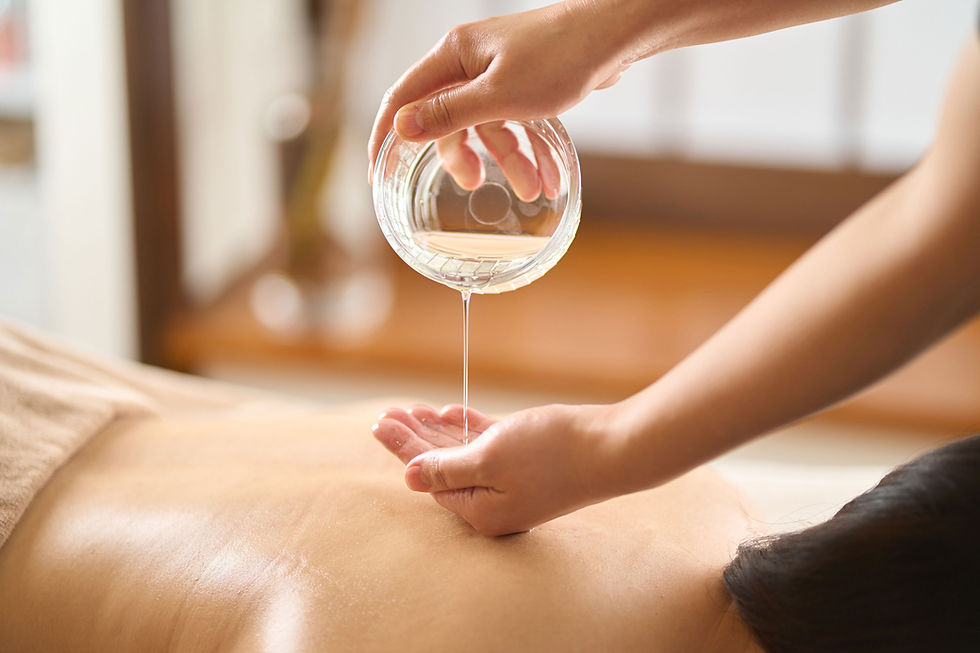
If you have ever left a massage thinking, “I wish they had worked a little deeper,” it may seem surprising to learn that some therapeutic techniques are intentionally gentle.
Manual lymphatic drainage is one of them.
The main difference is the treatment goal. Classical manual lymphatic drainage, or MLD, uses controlled, rhythmic skin movements to support lymph transport. Deeper massage generally uses techniques directed toward muscles and other soft tissues. Increasing the pressure does not turn one approach into the other. [1,2,3]
Understanding that difference can help you ask better questions and choose care that fits the reason you are seeking treatment.
What Manual Lymphatic Drainage Is Designed to Do
Your lymphatic system helps return fluid and proteins from the tissues to the circulation. It also has important immune and digestive functions. When lymph transport is impaired, fluid can accumulate and contribute to swelling and tissue changes. [2,4]
Lymph does not simply sit still until someone massages it. Collecting lymphatic vessels have their own pumping activity, supported by valves and other forces that help move fluid. Muscle activity and changes in pressure around the vessels also contribute. [5]
That is why the common statement that the lymphatic system “has no pump” needs some explanation. It has no single central pump equivalent to the heart, but it does have active pumping mechanisms. [5]
MLD is a specialized way of working with this transport system. In classical Vodder-based work, the practitioner gently moves the skin in controlled, repeated patterns. The technique depends on direction, rhythm, contact and appropriate planning—not simply how firmly the therapist presses. [1]

How Deeper Massage Differs
Massage includes many techniques and levels of pressure. A muscle-focused appointment may involve kneading, compression or sustained pressure, adapted to the person’s needs and tolerance.
Research suggests massage may help some pain conditions, although results vary and benefits may be short term. The evidence for one condition or technique should not be assumed to apply to every painful area. [3]
“Deep tissue” is also a broad appointment label. Before booking, it helps to ask what the therapist means by it and how they decide which approach to use.
Question | Classical MLD | Deeper muscle-focused massage |
What is the main focus? | Supporting lymph transport in an appropriate care plan | Working with muscles and related soft tissues for an identified goal |
What does it often feel like? | Gentle, rhythmic movement of the skin | Variable pressure, which may include deeper contact |
Does more pressure improve it? | Firmness alone does not reproduce the technique | Pressure should be adapted to the person and purpose |
What should guide the choice? | The cause of swelling, health history and treatment needs | The reason for discomfort, health history and treatment needs |
These are broad distinctions. Individual treatment should reflect the person’s circumstances and goals. [1,2,3]
Why Gentle Does Not Mean Unskilled
It is easy to associate effort with force.
We feel that association when we scrub a stubborn stain, knead bread or try to loosen a tight jar lid. A subtle treatment can therefore raise an understandable question: “Is anything actually happening?”
With MLD, the relevant question is whether the therapist is using an appropriate technique for an appropriate reason.
A skilled session requires more than knowing a sequence of strokes. It requires understanding the person’s history, the pattern of swelling, the condition of the skin and the pathways available for lymph transport. Clinical guidance emphasizes assessment and individualized management. [4]
You can ask a practitioner to explain what they are doing and why. You deserve an answer you can understand.

What About Swelling After Surgery?
Postoperative swelling deserves its own assessment.
The type of surgery, healing stage, wound condition and surgical team’s instructions all affect what is appropriate. New or worsening swelling should not automatically be assumed to be routine recovery or a problem that needs firmer massage. [4]
If you are seeking postoperative care, useful questions include -
Has my surgical team cleared hands-on treatment?
Are there any areas or techniques that should be avoided?
What is the goal of the session at this stage of healing?
How will changes in symptoms be communicated to the surgical team?
A recommendation for postoperative massage is not permission for every technique at every stage. The treatment plan should fit the actual recovery needs.
Where MLD Fits Into Lymphedema Care
Lymphedema care often involves more than a massage appointment.
The National Cancer Institute describes MLD as part of complete decongestive therapy, or CDT. Depending on the person’s needs, that care may also include compression, skin care and exercise. [2]
The combination matters. MLD is not automatically a substitute for the other components a person needs. Nor does a single session establish that a chronic condition has resolved.
Deeper massage over an area affected by lymphedema should not be treated as interchangeable with MLD. Discuss other types of work with the team managing your care. [8]
Appropriate care should include clear goals and a realistic way to evaluate progress.
Can Either Treatment “Detox” the Body or Melt Fat?
Those phrases need careful interpretation.
Moving accumulated tissue fluid is different from removing body fat. A change in swelling should not be described as proof that fat has been melted or that unspecified toxins have been eliminated.
There is also limited support for broad claims that healthy people need lymphatic massage to boost immunity, lose weight or perform a general detox. UCLA Health specifically cautions that these popular wellness claims extend beyond the evidence. [6]
An enjoyable, calming experience can still have value. Describing that experience accurately helps readers understand what a treatment can reasonably offer.

How to Choose an Appointment
Start with the reason you are seeking care, rather than the amount of pressure you think you should tolerate.
If your main concern is unexplained swelling, tell the practitioner when it began, whether it changes, and whether you have had surgery, cancer treatment, infection or another relevant medical condition. Some causes of swelling require medical assessment before hands-on treatment. [9]
If your concern is muscular discomfort, describe how it affects your day and which movements or activities make it better or worse.
Then ask -
What type of treatment are you recommending, and why?
What training do you have that relates to my concern?
What should the session feel like?
What changes would mean we should pause or refer for further evaluation?
How will we decide whether the plan is helping?
In Ohio, massage therapists can evaluate whether massage is advisable, but they do not diagnose a patient’s condition. Referral is an appropriate part of care when the concern requires another professional’s assessment. [7]
When to Pause and Seek Medical Care
Tell your practitioner about blood-clot history, infection, significant heart or kidney disease, recent surgery, current cancer treatment and other important health changes before treatment. A diagnosis does not always produce the same treatm
Sudden or unexplained swelling—particularly with redness, warmth, significant pain or fever—needs prompt medical evaluation. Chest pain or new shortness of breath requires urgent medical attention. [9]
Gentle touch does not replace appropriate screening.
Frequently Asked Questions
Should lymphatic drainage hurt?
Classical MLD is intended to be gentle. Tell the practitioner if the contact hurts or you are uncomfortable; pressure can be adjusted and the area reassessed. [1]
Is deep tissue massage better because it feels stronger?
A stronger sensation does not establish that a treatment is better suited to your concern. The goal, your health history and your response should guide the choice.
Can MLD replace compression for lymphedema?
Not automatically. Compression may be an important part of the care plan. Discuss changes with the professional managing your lymphedema rather than stopping a prescribed component because you have had a massage. [2]
Does feeling relaxed prove lymph flow has improved?
Relaxation is a subjective experience. It can be worthwhile, but it does not by itself measure fluid movement or establish that a medical condition has improved.
How do I know which treatment to book?
Explain your main concern and relevant health history before choosing. If swelling is unexplained or a diagnosis is uncertain, seek the appropriate medical evaluation first. [7,9]
Learning More at Full Circle Vitality
Choosing care is easier when you understand its purpose.
At Full Circle Vitality in Columbus, Ohio, education is part of the lymphatic therapy experience. You can learn more about what to expect during a session, explore post-surgical lymphatic care, or read about Valerie’s background.
When you are ready to schedule an appointment, visit the online booking page.
This article provides general education. Individual treatment decisions depend on your health history, the cause of your symptoms and appropriate professional assessment.
Sources and Further Reading
Dr. Vodder School International. Manual Lymph Drainage overview. Principles of classical Vodder MLD.
National Cancer Institute. Lymphedema. Information on lymphatic dysfunction, assessment and components of care.
National Center for Complementary and Integrative Health. Massage Therapy: What You Need To Know. Evidence, limitations and safety considerations for massage.
International Society of Lymphology. The Diagnosis and Treatment of Peripheral Lymphedema: 2023 Consensus Document. Lymphology. 2023;56:133–151.
Scallan JP, Zawieja SD, Castorena-Gonzalez JA, Davis MJ. Lymphatic pumping: mechanics, mechanisms and malfunction. The Journal of Physiology. 2016. doi:10.1113/JP272088.
UCLA Health. Lymphatic drainage massage—separating fact from fiction. Clinical education on appropriate uses and unsupported wellness claims.
Ohio Administrative Code. Rule 4731-1-05: Scope of practice—massage therapy.
Macmillan Cancer Support. Lymphatic drainage for lymphoedema. Guidance on trained treatment, compression and suitability.
NHS. Swollen ankles, feet and legs (oedema). Guidance on causes of swelling and symptoms requiring medical attention.


